Custom
DAFO 2
Product Features
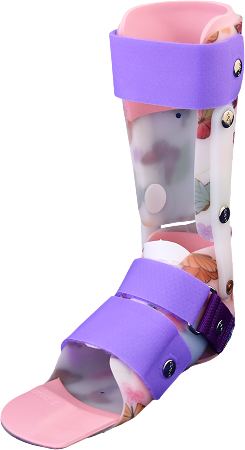
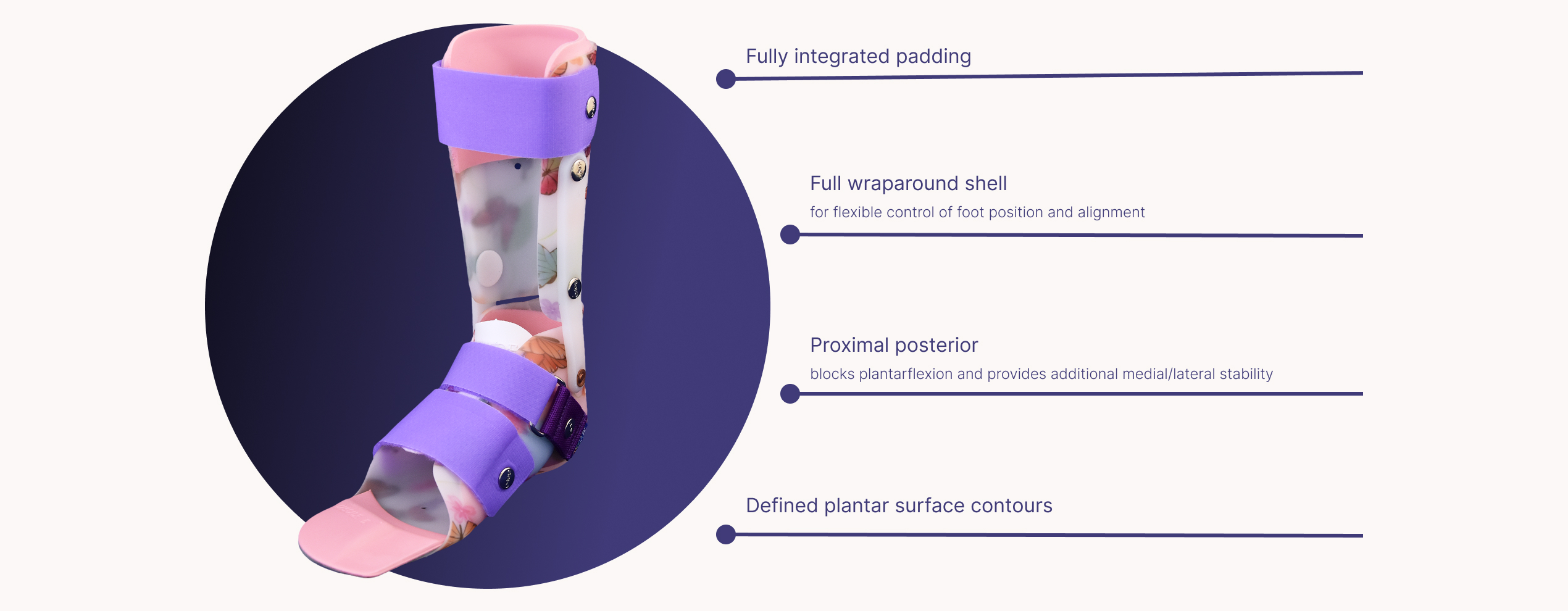
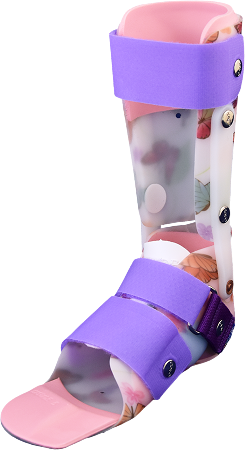
The DAFO 2 combines full wraparound foot control with a hinged proximal upright, designed to block ankle plantarflexion. The proximal anterior strap comfortably secures the orthosis to the leg. The proximal upright moves unrestricted with the dorsiflexion of the ankle. The DAFO 2 also provides a great deal of medial/lateral stability in both the stance and swing phases.
Patient Presentation
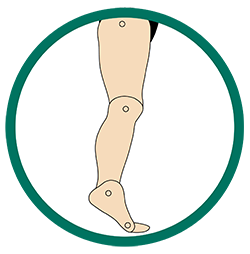
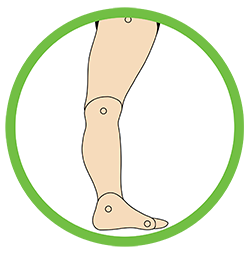
Learn more about the common gait and foot presentation groups our orthotic solutions help manage. Whether you're a parent, caregiver, or clinician, understanding these presentation groups is the first step in finding the right support for your child.
Sizing, Ordering & Fabrication
Obtain a cast or 3D scan of the patient's foot and ankle.
Complete a custom order form for the patient's foot and ankle.
Order the best size and style for the patient's foot and ankle.
Submit the cast or scan of the patient's foot and ankle.
Custom
DAFO 2
Reliable plantarflexion block with aligned foot positioning and free dorsiflexion.
Real-World Outcomes
In before-and-after assessments, patients wearing DAFO 2 demonstrated:

Consistent medial-lateral control

Reduced toe walking

Decreased knee hyperextension

Improved alignment during stance

More consistent foot positioning

Better forward progression through the gait cycle
Common Questions about DAFO 2
DAFO 2 is designed for patients who need a reliable plantarflexion block, stable foot alignment, and improved knee control while still maintaining free dorsiflexion.
DAFO 2 includes a posterior upright that blocks plantarflexion, helping reduce toe walking and support better heel contact during gait.
Yes. While it blocks plantarflexion, it still allows free dorsiflexion so the patient can move more naturally through forward progression during walking.
Yes. By controlling plantarflexion and improving foot alignment, it can help reduce the movement patterns that contribute to knee hyperextension during stance.
Each DAFO 2 is custom fabricated from a cast or 3D scan to match the patient's foot shape, gait pattern, and support needs.